Securing the Social License.
Engineering at the Boundary of Tribal Codes and Authority
1. Introduction. The Quiet Decisive Point
In the complex terrains of tribal and fragile regions, the ultimate success or failure of a major infrastructure or extractive project is determined not in the boardroom or on the construction site, but in the quiet, preliminary spaces of human acceptance. Long before ground is broken, before the first piece of heavy machinery is mobilized, the project's fate is often sealed. This acceptance, or the lack thereof, operates on a plane distinct from technical feasibility or regulatory compliance.
Projects routinely advance through all formal gates feasibility studies completed, environmental permits secured, financing locked in only to encounter an invisible, immovable wall. Work stalls inexplicably. Local tensions escalate into costly delays. Despite flawless engineering on paper, the initiative collapses. This recurring pattern points to a missing foundational element: the genuine social license to operate.
This concept is widely cited but profoundly misunderstood. It is frequently conflated with stakeholder management, corporate social responsibility programs, or a series of consultation boxes to be checked for compliance. In truth, social license is none of these. It is a pragmatic condition of operational viability. It is the unwritten, collective permission that allows engineering work to proceed smoothly in environments where the state's formal authority is not the only, or even the primary, source of legitimacy and order.
In tribal contexts, legitimacy is woven from a different fabric. It flows from deep connections to land, from lineages that trace authority through generations, from customary codes that have governed life for centuries, and from collective memory. An engineering plan that recognizes only the legitimacy of a federal permit or a ministerial decree is building on sand. It may have every legal right to proceed, but without parallel social sanction, it operates in a state of perpetual friction and latent conflict.
These failures are often quiet and insidious. Overt, dramatic opposition may not manifest initially. Instead, resistance emerges through a thousand cuts: unexplained delays in granting site access, the sudden unavailability of local labor, passive obstruction, or a thickening atmosphere of mistrust. By the time these symptoms are severe enough to appear on a project manager's risk dashboard, they have typically hardened into intractable problems that technical solutions alone cannot resolve. Therefore, to understand where projects truly succeed, one must shift focus from the concrete and steel to the human ecosystem that will host them. In these settings, securing social license is not a secondary "soft" concern; it is the essential bedrock upon which any durable physical engineering must be built.
2. Understanding the Tribal Mindset
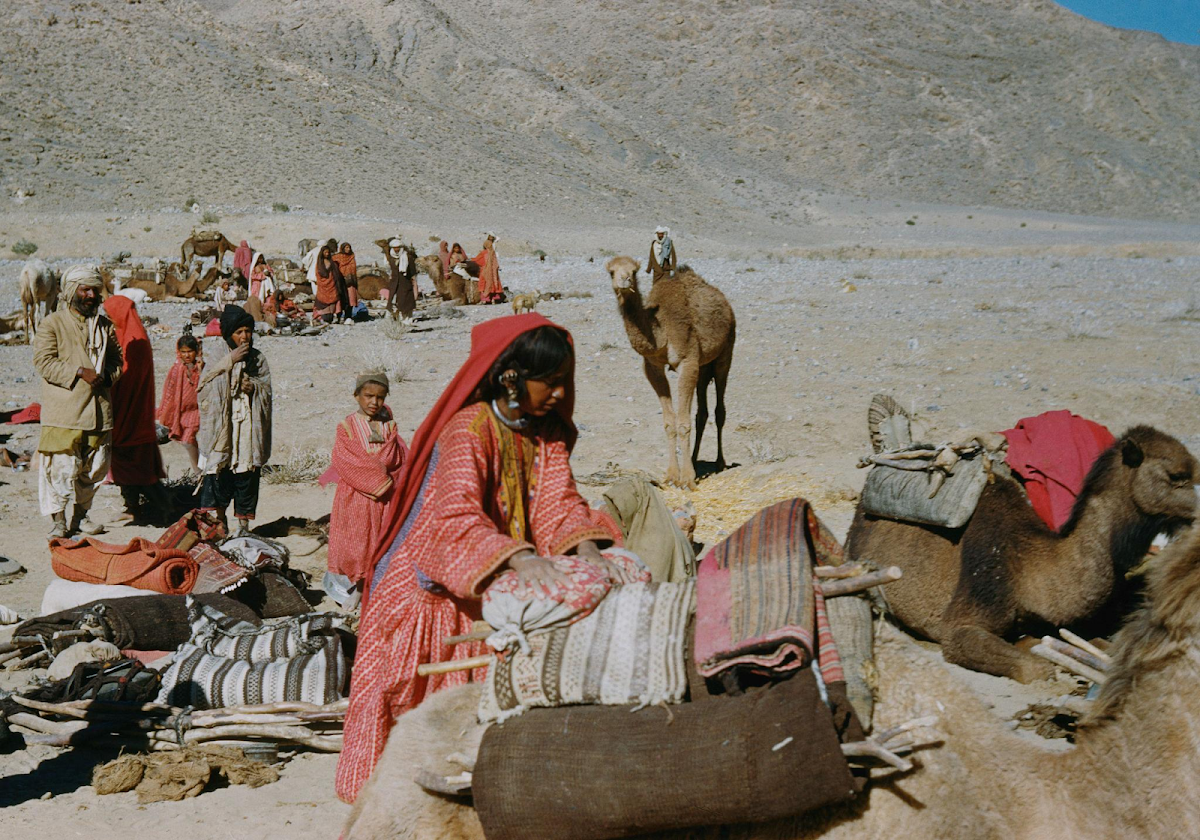
Any genuine effort to secure social license must begin not with a plan of action, but with a deliberate and respectful effort to understand the worldview of the tribal communities involved. This requires seeing the tribal individual not as a project risk to be mitigated or a beneficiary to be listed, but as a sophisticated, intelligent observer whose judgment will determine the project's local legitimacy. Life in remote tribal regions cultivates a distinct cognitive and social reality. External interactions are often limited, making social circles tight-knit, interdependent, and enduring. Continuity is measured in generations, not fiscal years, and institutional memory is preserved not in archives or databases, but in the lived experience and oral traditions of the people.
The physical environment is not a blank slate awaiting development but a fundamental shaper of consciousness. The vastness of mountains, the silence of deserts, and the density of forests are constant companions. This relationship with the wilderness fosters a form of intelligence that is highly attuned, pragmatic, and deeply contextual. It is an intelligence developed through acute observation of natural and human patterns, often underestimated by outsiders accustomed to different metrics of capability.
This attunement makes the tribal individual a masterful reader of subtext and intent. In initial engagements, he is not merely listening to words but meticulously gauging tone, body language, and the underlying attitude of the newcomers. He can swiftly discern whether he is being engaged with authentic respect or is being tactically managed as a hurdle to be cleared. This assessment is rarely a drawn-out analytical process; it is instinctive and immediate. The critical moment of failure occurs the instant he senses condescension, dismissal, or a lack of genuine regard. When this happens, engagement does not necessarily end with a protest; it ends with a quiet, internal withdrawal of consent. Respect is rescinded, and meaningful cooperation ceases. This loss of trust is profound, and no subsequent technical briefing or legal argument can easily restore it.
Central to this mindset is a conception of land that is alien to modern property law. Land is not a commodity, a passive asset, or a set of geographic coordinates. It is the repository of identity, the physical embodiment of history, and the means of survival all at once. It holds the graves of ancestors, the stories of origin, and boundaries defined by tradition long before the advent of cadastral surveys. Consequently, any physical intervention upon the land—a road, a mine, a pipeline—is interpreted not simply as an economic or engineering activity, but as a moral and existential gesture. It is a disturbance of a living, meaningful order.
This foundational understanding reveals why the approach must be inverted. In this context, the capacity to listen with genuine intent holds far more power than the ability to persuade with polished presentations. The individual who speaks less, observes more, and absorbs the social and physical landscape earns credibility faster than the one who arrives with pre-packaged solutions. When a tribal elder or community representative speaks, he expects his words to be received with full attention, not merely recorded for later analysis. This act of being heard, without interruption or premature correction, is a powerful signal. It communicates a recognition of his inherent authority, experience, and intelligence. Ultimately, social license is rooted in this psychological and cultural reality. It is granted not to the entity with the most power or capital, but to the people who first demonstrate unambiguous dignity, patience, and respect. Engineering initiatives that ignore this human starting point do not fail because communities are inherently opposed to change; they fail because they fundamentally misapprehend the nature of local intelligence and the terms of engagement.
3. Respect as the First Authority
In the operational landscape of tribal regions, the conventional hierarchies of authority are turned on their head. The authority vested in a project manager by a corporate charter, or in a government official by a state decree, holds little inherent weight. Instead, a different, more foundational form of authority must be established first: the authority granted by respect. Before any legal document is reviewed, any compensation package discussed, or any project timeline presented, an unspoken but critical assessment is underway. The community is judging the character and intent of the individuals who have arrived in their midst.
Here, respect is not an abstract virtue or a matter of polite etiquette; it is a concrete, operational prerequisite. It is demonstrated through tangible behaviors, foremost among them the practice of deep, attentive listening. When a tribal member speaks, particularly those recognized as elders or custodians, he expects his narrative to be absorbed in its entirety. His words are not data points to be noted, summarized, or filtered through an external framework. They are offerings of context, history, and perspective. To listen fully, without glancing at a phone, cutting him short to stay on agenda, or reformulating his concerns into pre-existing categories—is to signal recognition of his personhood and his standing. Conversely, to rush, to interrupt, or to visibly prioritize technical explanations over his testimony is to signal dismissal. This dismissal is immediately sensed and carries severe consequences.
Once this perception of dismissal takes root, the project’s formal authority effectively dissolves on the ground. The permits may be in perfect order, the contracts legally ironclad, but these documents become irrelevant to daily operations. The community’s withdrawal may not manifest as a violent blockade or a formal lawsuit, at least not initially. It manifests as a retreat into minimal compliance, a withholding of local knowledge, a cooling of cooperation, and a suspension of trust. Work becomes a series of negotiated permissions, each day fraught with uncertainty.
This dynamic explains the perplexing failure of so many well-resourced, legally-approved projects. They invest entirely in securing formal authority from the state while neglecting the prior and more critical step of earning social authority from the community. In tribal regions, the sequence is not interchangeable; it is absolute. Respect is the gateway. Process can only follow once that gate is opened. Therefore, the act of listening is transformed from a passive, courtesy-driven activity into the first and most active exercise of real authority. It requires the confidence to relinquish control of the conversation, to embrace silence, and to validate perspectives that may challenge the project’s initial assumptions. It demonstrates an understanding that intelligence, wisdom, and the power to grant or withhold consent are distributed throughout the community, not centralized in the hands of outside experts or officials.
Where this form of respect-based authority is established at the outset, a pathway for genuine dialogue is created. Within this dialogue, disagreements over routing, compensation, or timing can be surfaced and negotiated because a baseline of mutual recognition exists. Where dialogue exists, conflict can be managed. And where conflict is managed constructively, engineering can proceed with a social foundation that minimizes friction and resistance. Thus, the social license does not magically appear when the final community agreement is signed. Its seeds are planted and begin to grow the very first time a project representative chooses to listen deeply, affirming the dignity and intelligence of the people they seek to work among.
4. Tribal Codes as Living Governance
To the external observer, tribal codes and customs can appear as historical traditions interesting cultural artifacts perhaps, but irrelevant to modern project execution. This is a profound and costly misreading. In reality, these codes constitute sophisticated, living systems of governance. They are the evolved institutional framework, refined over generations, for managing the most critical aspects of communal life: land tenure, resource allocation, conflict resolution, and collective survival in challenging environments.
These systems are typically unwritten, yet they are far from vague. They possess a high degree of precision, clearly defining questions of profound importance to any project: Who has the right to speak for a piece of land or a community? What constitutes legitimate use of communal resources? How is compensation or benefit understood is it purely monetary, or does it involve reciprocal obligations, recognition, or future access? How are disputes between community members, or between the community and outsiders, traditionally adjudicated and settled? The enforcement mechanism for these codes does not rely on a police force or a judiciary. It relies on their deep legitimacy, on social memory that holds individuals and groups accountable, and on the powerful collective consequences of violating accepted norms.
The resilience of these systems lies in their continuity and embeddedness. The rules are not forgotten because they are not merely rules to be memorized; they are principles that are lived and enacted daily. Authority within this system is not bestowed by a remote bureaucratic process; it is earned through demonstrated wisdom, lineage, and service, and it is constantly visible and accountable to the community. Decisions carry immense weight because they are not seen as arbitrary or imposed from the outside; they are understood as part of a long, shared narrative of how order and fairness are maintained.
In many tribal regions, these indigenous governance systems are more immediate, effective, and trusted than the formal institutions of the state. The state’s law may exist on the books, but its presence is often episodic, distant, or perceived as alien. Tribal governance, by contrast, is omnipresent. It operates in daily interactions, kinship obligations, and the resolution of local disputes. It is the de facto regulatory environment.
This does not mean tribal codes are inherently anti-development or static. It means they are gatekeepers that demand alignment. When an external project ignores or attempts to override these systems, it does not erase them; it creates a governance vacuum. The project attempts to impose a foreign system of authority (corporate/state) in a space already governed by a robust local system. The conflict that inevitably emerges springs directly from this gap. The community’s resistance is frequently misinterpreted by project teams as irrational obstructionism or hostility to progress. In truth, it is often a rational, defensive response to being excluded from the very authority structures that have guaranteed their social order, fairness, and identity for generations.
Therefore, social license cannot be granted in opposition to these tribal governance systems. It can only be granted through them. Successful projects are those that understand this imperative. They do not seek to bypass local governance; instead, they respectfully engage it, seek to understand its logic and protocols, and design their interfaces with the community to work within that logic. To ignore tribal codes is not to neutralize them. It is to guarantee that their influence will reassert itself later in the project lifecycle, often in the form of crises, stoppages, and escalating costs that could have been avoided through early and respectful alignment.
5. The Boundary Failure
The most common and catastrophic point of failure for projects in tribal regions is not a collapsed bridge or a flawed geological survey. It occurs at a subtle, often unmapped boundary: the interface between the world of formal, state-derived authority and the world of local, socially-derived legitimacy. These are two parallel, co-existing systems of governance that operate on fundamentally different principles.
Modern engineering and project management are disciplines that function within a tightly defined ecosystem of formal authority. This ecosystem is built on permits issued by government ministries, contracts enforceable in national courts, rigid timelines driven by financial models, and compliance with codified regulations. Within this frame, authority is hierarchical and flows downward from the state to the regulator, from the corporate headquarters to the site manager, from the lender to the borrower.
Operating in parallel, and often beneath the visible surface, is the tribal societal system. Its operating principles are memory, kinship, collective consent, and reciprocity. Here, authority is not hierarchical in a bureaucratic sense; it is networked and relational. It flows not downward from a single source, but inward from the community's recognition, trust, and endorsement of an individual or group’s standing. A leader's authority is contingent upon this ongoing social consent.
Catastrophic failure, what we term "boundary failure," occurs when project planners assume these two systems are interchangeable or that the former can simply substitute for the latter. The fatal belief is that a sheaf of legal permits from the capital constitutes social consent. Acting on this belief, teams move to the implementation phase: surveyors are deployed, compensation rates are announced based on statutory formulas, construction schedules are published. On the project's Gantt charts and legal binders, everything appears authorized and lawful. Yet on the ground, in the lived experience of the community, the project feels illegitimate, alien, and imposed.
Conflict at this boundary is rarely a single explosive event. It is a slow, corrosive process. It emerges through accumulating friction: a road is suddenly blocked by villagers citing an unaddressed grievance; local laborers fail to show up after a perceived slight; community members become uncharacteristically silent and uncooperative in meetings; minor issues inexplicably escalate. Access to the site becomes a daily negotiation. Budgets balloon with unplanned security and community liaison costs. A proliferation of small disputes drains managerial time and energy. By the time the project leadership realizes the scale of the problem and attempts to apply formal remedies, legal injunctions, police intervention, high-level political pressure—the relational bridge is already burned. The community now sees the project purely as an adversary.
This is not a rejection of the state's sovereignty or a principled stand against all development. It is a pragmatic and often defensive response to exclusion. When a project bypasses the community's own systems for granting permission and managing change, it sends a clear message: "Your authority over your own affairs is not recognized." The project is thus framed as an imposition, a colonization of local space by external forces. In this context, even the most benign engineering work is transformed from a potential partnership into a perceived intrusion.
The profound tragedy of boundary failure is its avoidability. It is not precipitated by an inherent local hostility to progress or investment. It is caused by a fundamental analytical error: the assumption that authority in these regions is singular and monolithic. The reality is that authority is layered. Formal state authority is one layer. Deep, local social legitimacy is another, often more powerful layer. A durable project is one that actively maps, recognizes, and builds connective tissue between these layers from the very beginning. It understands that engineering work can only proceed sustainably where there is a convergence of these authority streams. Boundary failure is the direct result of ignoring this complex, layered reality.
6. Social License as an Engineering Constraint
Within the engineering discipline, certain non-negotiable parameters are recognized as primary design constraints. The properties of the underlying geology determine foundation design. Hydrological patterns dictate drainage and flood mitigation. Climatic extremes inform material selection and structural tolerances. These are not "soft" factors to be considered later; they are foundational inputs that shape the very feasibility and form of a project from its conception. Ignoring them is professional malpractice, guaranteeing technical failure.
The central argument for operating in tribal regions is that social license must be elevated to this same category of fundamental engineering constraint. It is not an external "social issue" to be handed off to a separate department for management during implementation. It is an intrinsic component of the project's ecosystem, a force as real and consequential as the water table or the soil bearing capacity. It shapes feasibility from the very first sketch. To treat it as a secondary concern, an add-on to be addressed once the technical design is finalized, is to commit a critical error in project design. This error systematically converts complex human, cultural, and political realities into later-stage technical and financial crises.
Reframing social license as a core engineering constraint necessitates a transformation in methodology and mindset. Project definition can no longer start solely with topographic surveys and geotechnical drilling. It must begin with what might be termed "social and authority mapping" a deliberate effort to understand the landscape of influence, decision-making, and legitimacy in the project area. This mapping must precede the drawing of alignment sheets or the siting of facilities. Mobilization of equipment must be preceded by sustained, unstructured dialogue aimed at mutual understanding, not persuasion. The project schedule must build in time for this foundational work, recognizing it as non-compressible.
This reframing also fundamentally redistributes responsibility. The task of securing social acceptance cannot be relegated to a public relations team, external community relations consultants, or a standalone sustainability unit. It becomes a direct, non-delegable core function of project leadership, equivalent in importance to safety management, quality control, or financial oversight. The project director must own this constraint as intimately as the lead engineer owns the structural design.
The cost of ignoring this constraint is severe and manifests as hidden systemic loads on the project structure. The delays from access disputes, the cost overruns from security escalations, the managerial drain from constant grievance resolution, and the profound reputational damage that scares off future investors and partners these are all symptoms. They are often misdiagnosed as "political risk" or "security challenges," but their root cause is typically the early-stage neglect of the social license constraint. The project is, in effect, trying to build on a social fault line it refused to survey.
Paradoxically, engineering that proactively integrates this human constraint does not slow down; it achieves a higher order of stability and predictability. By recognizing social and governance systems as critical structural elements of the project environment, it systematically reduces uncertainty instead of unleashing it. The most perilous and common assumption in cross-cultural engineering is that local society will, or should, adapt itself to the needs of the project. The philosophy of durable engineering inverts this: the project must be designed, from its very inception, to adapt respectfully and intelligently to the society in which it will be embedded.
7. Designing the Bridge to Alignment
Once the social license is rightly understood as a non-negotiable design constraint, the central challenge becomes a practical one: How does an engineering project achieve alignment with the complex social and governance terrain of a tribal region? This process is not a single act of negotiation but the careful construction of a living bridge a sustained interface between two systems. This construction requires deliberate, sequenced, and respectful steps.
The foundational step is authority mapping, not stakeholder listing. A conventional stakeholder analysis often identifies groups and representatives based on formal roles or proximity to the project footprint. In tribal contexts, this is inadequate and can be dangerously misleading. True authority mapping seeks to understand the landscape of influence, legitimacy, and decision-making as defined by the community itself. It identifies the recognized custodians of land, the elders whose counsel is sought on weighty matters, the heads of influential lineages, and the informal councils that deliberate on communal issues. These figures may hold no state-issued title, yet their authority is the gateway to local legitimacy. Bypassing this structure in favor of dealing only with state-appointed village heads or youthful, English-speaking contacts is a recipe for ineffective engagement and latent conflict.
The second critical step is early listening, before design is frozen. This is the antithesis of the common practice of "consultation," where a nearly complete plan is presented for commentary. Early listening involves initiating open-ended dialogue during the conceptual and pre-feasibility phases, when route options, site locations, camp placements, and work sequences remain fluid. The goal is not to secure immediate approval but to understand potential cultural, historical, and social sensitivities. A willingness to adjust a road’s alignment by a few hundred meters to avoid a sacred grove, or to redesign a water intake to respect seasonal usage patterns, demonstrates respect in a tangible way. These small, proactive design accommodations, made when they are still logistically and financially feasible, prevent the large, costly, and relationship-shattering conflicts that arise when communities feel their voiced concerns were ignored.
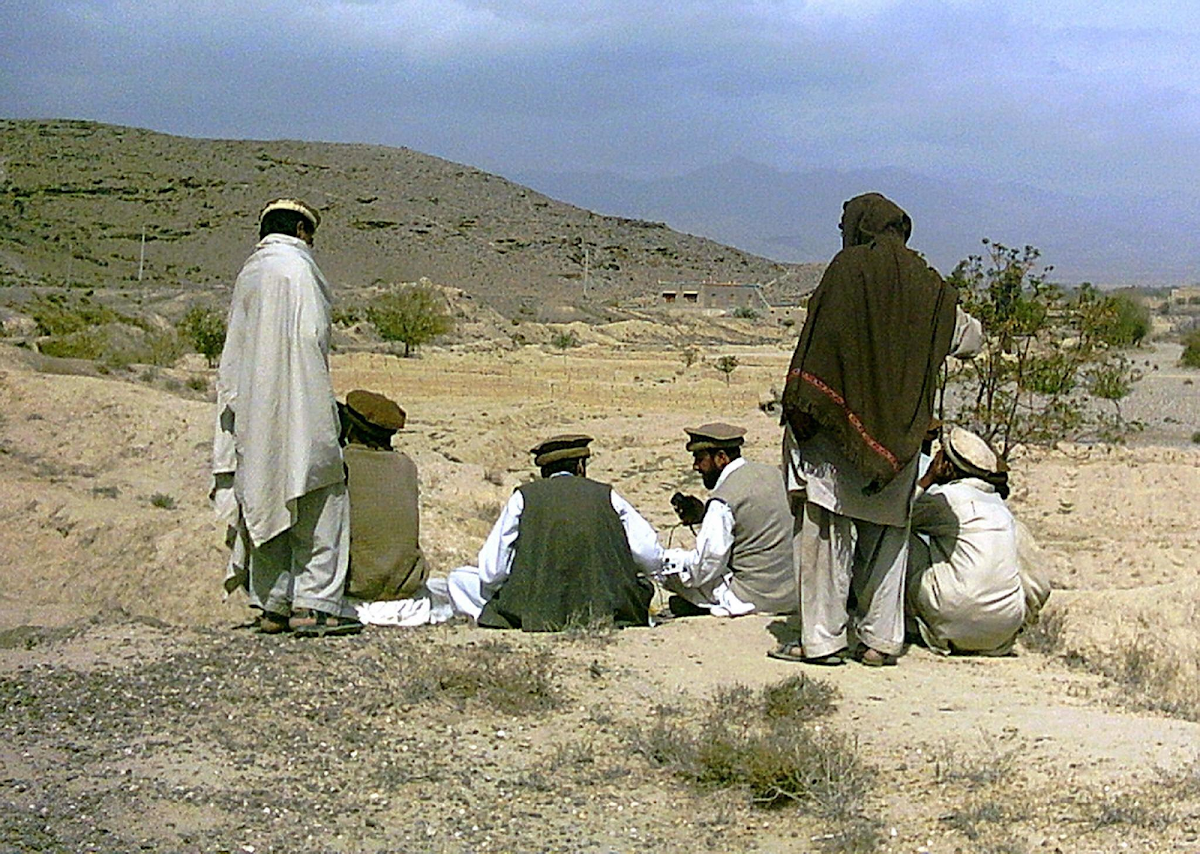
The third step involves instituting respectful engagement mechanisms. This requires abandoning the corporate meeting paradigm. Engagements must follow the local rhythm, not a project manager’s tight schedule. They may need to be held at times and in venues chosen by the community. The protocol of speaking is crucial: allowing elders to speak first, not interrupting, and valuing silence as a period of reflection, not an awkward pause to be filled. Rushing to a decision or cutting discussions short to adhere to an agenda signals impatience and disrespect, actively weakening the very trust the process aims to build.
Fourth, the project must align compensation and benefit-sharing with local norms and conceptions of value. A standard, monetized compensation package based on statutory land rates often fails catastrophically. For communities where land is identity and economy is relational, monetary payment alone can feel like a transactional severing of a sacred bond. Effective alignment considers forms of recognition—such as formally acknowledging custodians in ceremonies and ensures continuity, perhaps through preferential employment, ongoing access to certain resources, or support for communal priorities like a school or clinic. The process must also be transparent and clear, administered in a way that aligns with local distributive justice principles to avoid creating internal jealousies and new grievances. A generous compensation package that is perceived as unfair by local norms will generate resentment, not goodwill.
Finally, a robust bridge requires a dispute resolution mechanism grounded in avoidance and local integration, not escalation. Tribal societies invariably possess their own sophisticated, time-tested methods for airing grievances, mediating conflicts, and restoring social harmony. A project that immediately defaults to formal legal channels or police intervention for every minor incident escalates tension and declares the local system illegitimate. The wiser approach is to understand these indigenous methods and, where possible, integrate them into the project’s grievance management protocol. This might involve respected local mediators in the initial stages of a dispute. By respecting and utilizing these systems, minor misunderstandings can be resolved relationally before they harden into intractable legal claims or catalysts for community-wide mobilization.
This bridge forged through mapping, listening, respectful protocol, aligned benefits, and integrated dispute resolution is not a structure built once at the project’s inception. It is a dynamic, living interface that must be maintained continuously. Trust is not a milestone to be achieved at the "Community Approval" gate; it is a fragile condition that must be nurtured and validated through consistent, respectful action every single day. Engineering that is anchored in this diligent process of bridge-building does not surrender its technical or managerial authority; on the contrary, it secures and stabilizes that authority by rooting it in the enduring legitimacy granted by the host community.
8. Implications for Sectors and ESG
The rigorous pursuit of social license transcends community relations and carries profound strategic implications for entire sectors, investment frameworks, and national governance. When treated seriously, it becomes a direct determinant of project bankability, schedule certainty, and long-term investor confidence.
In capital-intensive sectors like mining, energy, and linear infrastructure, the greatest schedule and cost risks are rarely purely technical. They are socio-political. The most debilitating delays stem from access blockades, work stoppages due to community protest, and the security escalations required to manage rising tensions. Each day of delay translates into massive revenue loss and capital cost overruns, while each conflict inflicts lasting reputational damage. A robust, early-secured social license functions as a form of risk insulation, dramatically reducing the probability of these disruptive events. It provides a reservoir of goodwill that can see a project through inevitable minor frictions.
For institutional investors and lenders, particularly those operating in emerging and fragile markets, uncertainty is the primary deterrent. Technical risks (e.g., ore grade, soil stability) can be modeled and priced. Legal risks can be insured against. The amorphous, dynamic risk of social instability of a community turning against a project—is far harder to quantify and therefore represents a premium risk. A project that can demonstrably show its design and operations are aligned with local governance systems sends a powerful signal of durability and lower political risk, making it more financeable and insurable.
This is precisely where contemporary ESG (Environmental, Social, and Governance) frameworks often reveal a critical practical flaw. Too frequently, the "S" or Social component is reduced to a set of standardized metrics, box-ticking exercises, and retrospective reporting—counting training hours, documenting consultations, and tracking grievance numbers. Without a deep, grounded understanding of and alignment with local authority structures, this ESG work remains descriptive rather than protective. It documents social performance without actually securing social stability. A true social license approach transforms ESG from a reporting obligation into a core engine of operational resilience. It moves social performance from the sustainability report into the daily reality of secure, uninterrupted operations.
For host governments, this approach offers significant advantages. Projects that operate with genuine social acceptance reduce the enforcement burden on the state. They require less policing, fewer judicial interventions to resolve disputes, and less political capital spent on quelling local opposition. This allows state authority to be preserved and exercised in more legitimate, less coercive ways, enhancing rather than eroding the social contract in remote regions.
Finally, for the engineering and project management profession, the implication is a fundamental expansion of required competency. Technical brilliance alone is now insufficient. The ability to "read" the social terrain, to understand non-formal systems of authority, and to translate across cultural boundaries has evolved from a soft skill to a core leadership discipline. In regions where tribal codes are influential, to ignore them is not a neutral act; it is an active acceptance of severe, unquantified risk. To consciously align with them, however challenging, is not a concession but a sophisticated strategy for ensuring a project’s ultimate deliverability and longevity.
9. The Engineer as Listener and Translator
In the frontier where large-scale engineering meets intact tribal societies, the traditional role of the engineer is necessarily transformed. He or she can no longer remain solely a master of technical specifications and construction sequencing. To be effective, the engineer must also embrace the roles of listener and translator, becoming the vital human interface between two powerful, often dissonant, systems of knowledge and authority.
On one side of this interface lies the world of formal, codified authority: the universe of contracts with their clauses and penalties, detailed engineering specifications, rigid project schedules, and compliance frameworks mandated by regulators and financiers. This is a world of documents, numbers, and legally-enforceable obligations. On the other side lies the world of lived, experiential systems of meaning: the deep connection to land as ancestor and provider, the oral history that defines identity, the lineage that confers responsibility, and the social legitimacy that governs daily life. This is a world of relationships, stories, and morally-enforceable obligations.
Conflict arises not because these two systems are inherently incompatible, but because they speak different languages and operate on different logics. The absence of a competent translator ensures misunderstanding will fill the void. The engineer, often the first and most persistent point of contact, is uniquely positioned to fulfill this role.
The first and most critical tool in this expanded toolkit is listening. This is not the passive hearing of words, nor is it listening selectively to find agreement or a point of leverage. It is active, empathetic listening aimed solely at understanding. It requires the patience to sit through long meetings, the humility to suspend one’s own assumptions, and the fortitude to hold silence—allowing the space for reflection and for the full context to emerge. This act of listening, devoid of immediate judgment or solutioneering, is the first and most powerful gesture of respect.
Translation is the necessary next act. It is a two-way process. First, the engineer must translate community concerns—often expressed in the language of spirit, ancestry, fairness, and fear—into terms that can inform technical and managerial decisions. A statement about "disturbing the ancestors" must be translated into a design input that might mean rerouting a pipeline. A concern about "breaking the land’s back" must be understood as a critical input into blasting protocols or waste placement. Conversely, the engineer must translate technical constraints—why a road must follow a certain gradient, why a work camp must be located where it is—into a narrative that is respectful, clear, and acknowledges trade-offs. This explanation must be offered in terms that make sense within the community’s worldview, not just within the framework of engineering efficiency.
Embracing this role does not diminish the engineer’s authority; it re-bases and strengthens it. The engineer who listens and translates is not abdicating control but is exercising a higher form of professional judgment one that recognizes the full spectrum of realities that will determine the project’s fate. In this sense, engineering itself becomes a medium for building trust. While steel, concrete, and technology shape the physical landscape, it is this deeper understanding that shapes the social and political landscape in which the physical assets must survive. Projects endure when engineers on the ground accept this profound responsibility: to act not merely as builders, but as custodians of coherence between the world they are sent from and the world in which they must build.
10. Conclusion: Engineering That Endures Listens First
The history of failed projects in tribal regions teaches a consistent, humbling lesson: engineering does not fail because these communities are inherently opposed to development or progress. It fails when the paradigm of development itself refuses to listen, to see, and to respect the complex human ecosystems it seeks to alter. Social license is the manifestation of a community’s granted permission, and it cannot be seized by force, rushed by aggressive timelines, or substituted by paperwork. It is earned, slowly and deliberately, through the demonstrable practices of recognition, patience, and respect.
The correlation is direct and inescapable. Where tribal authority and intelligence are acknowledged and engaged as integral parts of the project system, engineering gains a profound stability. It is buffered from shock, endowed with local knowledge, and granted the benefit of the doubt when problems arise. Where this authority is ignored or overridden, resistance whether passive or active becomes not just possible, but inevitable. The project enters a state of permanent friction, where every activity is a negotiation and every cost is inflated by the price of mistrust.
Modern projects, trapped in the logic of spreadsheets and milestone charts, consistently underestimate this truth. They pour resources into securing formal authority from distant capitals while overlooking the imperative to cultivate local legitimacy on the ground. The result is a litany of non-technical problems chronic delays, proliferating disputes, eroded trust, community backlash that nonetheless have decisive technical outcomes: missed deadlines, blown budgets, and abandoned sites.
Engineering that aspires to endure must therefore understand and embrace its own limits. It must recognize that the land is never empty; it is full of meaning. It must see that authority is never singular; it is layered, with local legitimacy often being the most foundational layer. It must accept that intelligence is never monopolized by experts; it is distributed throughout the community in forms that technical training alone does not confer.
By adopting the principle of listening first, projects do not slow down; they achieve a state of settled readiness. They replace the brittle certainty of a Gantt chart with the resilient adaptability of a trusted partnership. At the fraught and fertile boundary between tribal codes and formal authority, social license is the essential bridge. It is the structure that carries the weight of ambition across the chasm of cultural misunderstanding. Those who invest the time, humility, and resources to build this bridge early and maintain it diligently are not just managing a project they are building something that lasts.
About the Author
Umer Ghazanfar Malik (UGM), PE, FCIArb is a civil engineer, infrastructure governance specialist, and dispute avoidance practitioner with extensive experience in complex projects across Pakistan and other fragile and emerging regions. A retired Lieutenant Colonel of the Pakistan Army and the first Fellow of the Chartered Institute of Arbitrators (FCIArb) from the Pakistan Army, he has worked at the intersection of engineering, law, and governance, particularly in environments shaped by tribal authority, weak institutions, and high social risk. His work focuses on social license, dispute avoidance, and restoring equilibrium in large infrastructure and extractive projects, treating engineering not only as a technical discipline but as a system embedded in human, legal, and cultural realities.
Umer Ghazanfar Malik (UGM), PE, FCIArb
UNDP GPN ExpRes Global Consultant